≡ Menu

Adapt or Change?

A reader posted a comment a couple of days ago on a post I’d written back in March, titled “Puzzles, Adventure, and Longevity.” In the post, I talked about how puzzle solving, either on paper on in navigating an uncharted landscape in life, has been shown to make us happy, and that optimistic people tend to do better at puzzle solving. They also tend to live longer.

A question I posed in that post was whether the optimism that made people take on and do better at adventure and puzzles was inherent in their personalities, or conversely, was acquired by successfully struggling through puzzles and adventures, and learning that they could, in fact, prevail in making order out of chaos.

“I’m not sure whether optimism makes a person take on adventure, or whether adventure, successfully undertaken, makes a person more optimistic. If pressed, I’d answer yes to both,” I concluded.

A reader named “Mr. Z,” however, pointed out that puzzle solving was about changing a situation, such as making order out of chaos. More important to happiness and longevity, he said, was “adaptive” intelligence—or the ability to simply adapt to what was.

I had to ponder that one for a while. Even Darwin argued that adapting to change is essential for survival (e.g. adapt or die). But does that mean we should never attempt to take the reins into our own hands to change our circumstances or find a new path out of a place other people accept? [click to continue…]

Does Comfort Stifle Creativity?

The New York Times recently ran an article looking back on the golden age of “SoHo”(or, for those unfamiliar with the shorthand of New York’s neighborhoods, the artistically inclined neighborhood in Manhattan located SOuth of HOuston Street) back in the 1970s, when it was a gritty, unfinished and cheap place to find studio space instead of the chic zip code it has become today.

Titled “When Art and Energy Were SoHo Neighbors,” the article looks at why that particular place—at that particular time—was such a hotbed and incubator of budding artistic talent.

“Back then … we were all broke,” reported musician/artist Laurie Anderson, who first made a name for herself in that SoHo world. “We saw ourselves as workers, conquering someplace inhospitable, and we had a real sense of place.”
The article goes on to list a number of later-famous artists who got their start chronicling, or incorporating, the rough edges of the neighborhood. Some did performance art in abandoned buildings, others took photographs of abandoned property fragments the city would later sell at auction. Others wrote and performed music. But they all contributed to a body of work that was powerful, memorable, and highly creative.

What made that particular neighborhood such a fertile creative landscape? Or, as the article’s author put it, “Why was SoHo in its early days vibrant and special in ways that, despite the art world’s current money and hype, seem so hard to come by now?”

Several of the artists interviewed for the article said it was a particular sense of “place” that residents felt; a sense of neighborhood and community that informed their work. But I think it’s more than that. The residents of Scarsdale, NY and Beverly Hills, CA (e.g. extremely affluent communities) have a strong sense of “place,” as well. But neither of those towns is an epicenter of innovative, artistic expression and creativity. [click to continue…]

Of Passion, Risk and Choice

In 1900, three years before he and his brother Orville invented the first controllable, powered airplane, Wilbur Wright wrote to a friend: “I have been afflicted with the belief that flight is possible to man. My disease has increased in severity and I feel that it will soon cost me an increased amount of money, if not my life.”

It’s an interesting description of passion—as a disease that exerts such an inescapable pull on those it visits that they are powerless to turn away from where it leads them. It’s also a description I’ve been thinking about particularly this week, as astronaut Mark Kelly, the husband of wounded U.S. Representative Gabrielle Giffords, climbs aboard the Space Shuttle Endeavor and heads back into space for the 5th time, and Neal Beidleman, a guide for Scott Fischer who survived the 1996 Mt. Everest disaster, heads back to Everest for another attempt at the mountain.

Every person has their own personal risk thermostat, a fact that appears to have biological roots as well as, perhaps, psychological ones. As I’ve written before here, people who have lower-than-normal levels of an enzyme called monoamine oxidase B (MAO B) seem to feel less fear and crave adrenaline-producing thrills more than the rest of us. [click to continue…]

The Adventure of Change

Adventure, as I’ve often said, comes in many forms and guises. This past week, for example, I found myself in the middle of quite the unexpected adventure, down at the Sun ‘N Fun air show in Lakeland, Florida, when a tornado came howling across the airport. I was fortunate, in that I was already standing inside one of the big and fairly sturdy exhibit hangars there, a few yards back from the sliding, 30-foot-tall hangar door, when the tornado and associated microbursts hit.
The National Weather Service termed it a fairly small tornado, as those things go, although that’s a bit like someone telling you that the creature that just attacked you was a fairly small Great White Shark. Tornadoes, like Great Whites, don’t come in benign sizes.
Be that as it may, both the weather and the crowd’s response to it were fascinating events. It made me wonder, once again, how the human race has survived this long, given that our curiosity and desire to be close to the action seem to outweigh our instinct for personal safety. It was also an adventure, in that the outcome of all this meteorological fury was not at all certain (especially when water began pouring through the roof of the hangar). The YouTube videos do not begin to convey the intensity of being up close and personal to that kind of natural phenomenon—impenetrable sheets of rain and 95-mph winds that lifted exhibit tents, airplanes, and objects off the ground and launched them through the air as if they were matchstick toys. From that point on, every person at the show faced the adventurer’s dilemmas of choosing from questionable options and figuring a path forward based on incomplete information, in a land suddenly wiped clean of any clear path.
Stay in the hangar? Or risk getting caught out in the open while seeking sturdier shelter? Attempt to leave the show? Or avoid roads that might be blocked with downed wires and trees? And for the hundreds of people whose wares or tents or airplanes were destroyed in those frighteningly wild 10 minutes, there was the added shock of loss and the dilemma of … what next?
In the end, however, while there was a jaw-dropping amount of property damage, nobody was killed or even seriously hurt. So, there’s a lot to be thankful for in the luck and happenstance of that. All I can say is, I have a newfound respect for the power of Mother Nature to simply obliterate everything in her path. Which is a feeling the entire nation of Japan undoubtedly shares with me, these days.
But all of the excitement of the tornado almost eclipsed the other adventure I undertook this week, and which was announced at the Sun ‘N Fun air show: namely, that I have left Flying magazine and am moving my “Flying Lessons” column to Sport Aviation, the official magazine of the Experimental Aircraft Association, or EAA. [click to continue…]

I Do This Because: Terry Tegnazian

Ed Note: “I Do This Because …” is a series of guest essays on this site by adventurers, entrepreneurs, and brave explorers of experience, uncharted territory, and life. As the title indicates, the essays offer the authors’ reflections on why they chose the path they did, and why they continue on that path, despite all the challenges, costs, and discouraging moments that come with any uncharted adventure.

For more information on the origins of the “I Do This Because” essays, see my own entry. And, as always, if you know of anyone you think would make a good guest essayist, or have your own answer to why you’re pursuing the particular, challenging path you’re pursuing, please share it!

About the Author
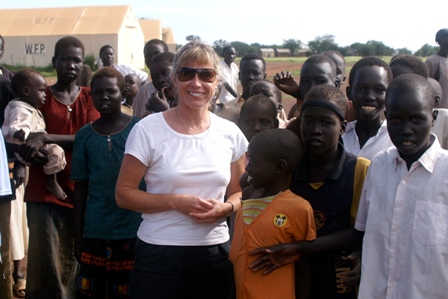
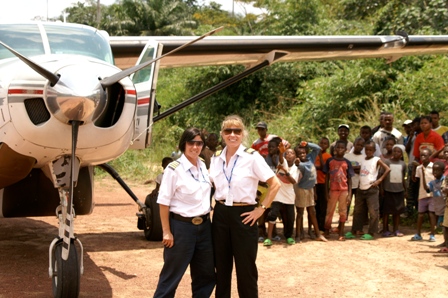
Terry TegnazianTerry Tegnazian, a former entertainment attorney, is a graduate of Brown University (A.B. Applied Mathematics) and the Yale Law School. Among her many involvements, she is president and co-founder of Aquila Polonica Publishing, which specializes in publishing the Polish World War II experience in English. Aquila Polonica has offices in Los Angeles, where Terry  is based, and in England. For more info, see www.aquilapolonica.com.
“I Do This Because …”

I’m a sucker for heroes!

I’d have to be a sucker for something pretty huge (or maybe, some cynical persons might say, simply a sucker?) to start a publishing company from scratch, in one of the most “niche” of niche markets, with a partner in England whom I met over the internet, at a time when the book business is reeling from fundamental structural shifts caused by rapid technological advances …

If you’d told me ten years ago …
I would (a) start a publishing company, that (b) specializes in publishing the Polish World War II experience, I would have said “Why? Don’t know anything about it, not interested in it.”

I’m not at all Polish (my personal background is Armenian), nor is my husband or anyone in our families.

But then, I’ve never been a person with one-year, five-year, ten-year plans, or a Plan A, B or C for my life. I didn’t know what I wanted to be when I grew up—I still don’t know, but now I’m a lot more comfortable with the unknowing and the adventure of it all. [click to continue…]

Leaps: Pitching Academia for a Nomad’s Search

Say you have a great new idea for a business, a book, a website, a research project, or a documentary film. You do some preliminary work while holding down your day job, but you’re frustrated at how slow the progress is. Are you missing opportunities because you’re not devoting full time to the project? Or would it be foolhardy to put all your eggs in your new and unproven basket?

Welcome to the agony of the cliff edge and the leap. It’s one of the persistent challenges creative artists and entrepreneurs face, and it’s a tricky, tricky call to make correctly. Up to a point, the existing job provides the economic stability to make everything else possible. But a “real” job also takes time and energy to sustain. So there is always a point at which the stable job actually becomes a bit of a boat anchor, draining the new venture of the energy and attention it needs to get up “on the step,” as it were.

It also can be exhausting to try to keep a foot in more than one world, regardless of what those “worlds” are. Any time I embark on an adventure, even if the adventure is a challenging one, my life simplifies tremendously as soon as I actually depart and leave all the old or “normal” demands of my daily life behind. Then, and only then, can I focus completely on the adventure at hand, and allow myself to immerse in all the joys and travails of that experience.

But making that leap is scary—especially if the adventure is a professional one, requiring severing ties to a paycheck or lifestyle. What if you can’t make the finances work out okay? Will you regret what you’ve given up? Will you end up sleeping on a Lexington Avenue subway grate? [click to continue…]

The Questions That Won’t Let Go

Where does passion come from?

I’m doing a lot of thinking about that question lately, as I research the subject of passion for a book I’m working on. And while the answer is more complex than I can get into here … on some level, I think passion comes from a question, vision or idea of something that we get in our minds and then, for whatever reason, won’t let go. It pulls at us like a loose tooth our tongues keep returning to, urging us to follow it with an insistence that, if the path proves interesting, increases in intensity. In my case, for example, the very question of “where does passion come from?” has sparked a passion for finding an answer. Hence the book project.

But I recently came across another example worth reading about. In an article titled “Writing the Play His Curiosity Led Him To,” a New York Times writer described how the play The Whipping Man, now playing at the City Center in New York, came to be.

The play, set over three days in April 1865, as Lee surrenders at Appomattox, revolves around a Jewish slave-owner and two of his suddenly-free slaves, who were raised as Jews on his plantation, as they all try to figure out what to do next with their radically changed identities and world. All this amidst the drama of the slave owner needing an emergency amputation, and the irony of the three men facing the start of Passover together just as the slaves win their freedom.

The play, which was “developed over two years …  and many rewrites” from a 20-minute one-act play, marks the New York debut of its 33-year-old playwright, Matthew Lopez. He wrote it in between office jobs after failing to make it as an actor in New York. And since the first performance of the finished play was in 2006,  that means he began working on this project at least seven years before it hit a New York stage. (The emphasis just to point out, once again, how long the uncharted road can run through the woods before getting a glimpse of sunshine on it.)

But what I find most interesting about Lopez’s story is his answer to the question “What made you write a play about Jewish slaves and slaveowners at the end of the Civil War?” [click to continue…]

More Lessons of Change from Tahrir Square

There are many ways to view, celebrate, or worry about the sea change that seems to be unfolding before our eyes in the Arab region at the moment. But one of the reasons it intrigues me is because it offers a vivid, real-life example of how change occurs, and the elements that allow it to happen.
A long article in The New York Times this week outlined both the long road to change that was taking place in the region before the 18 days of public events that brought down the government, as well as some of the elements that helped that effort’s ultimate success. And the lessons are instructive for anyone contemplating or attempting any level or kind of change in their lives or the world.
For starters, the efforts that culminated in the 18 days that shook the Arab world began in 2005. Six years ago. We didn’t hear about these efforts, of course—partly because we don’t have a good understanding of what’s going on behind the scenes in many foreign countries—especially societies and cultures that differ greatly from ours. But it was also because the “Youth for Change” or “April 6” movement, as it was called, couldn’t get enough followers to make much of a mark. Anyone who’s ever tried to found a company, organization, or movement could relate.
It is the classic early stage of the hero’s journey. The hero has a vision, or has enough tragedy or pain inflicted on him, that he leaves the comfort of his old life in the village, and attempts to effect some kind of change, in himself or in the world, often battling an impossibly strong opposing danger or enemy. But the villagers don’t follow, and the early efforts don’t go well, leaving him isolated, in the forest, alone.
What happens to change that? Many things … he gains wisdom and skills, gets some lucky breaks, the opposition makes some mistakes, and the forces in the world shift. But one of the key elements that always exists in a hero’s journey is the appearance of kindred spirits who join forces with the solitary hero and give him both the psychological support and the force strength he needs to succeed. [click to continue…]

Risking Change

In reading reports of the astounding and ever-evolving unrest in Egypt (and, indeed, across the entire Arab world) these past couple of weeks, one particular quote caught my attention. In answer to a question about what had inspired so many people in Egypt to risk arrest or assault—or worse—to protest, one protester answered, “We wanted change badly enough to risk it.”
“It,” I gathered, meant the risk of reprisal, arrest, or other personal injury or consequences. But the phrase would apply, as well, to the bigger risk the protesters are taking, stepping into the very unpredictable and uncertain land of change.
Most of the time, on this site, the focus is on relatively small-scale change: people trying new adventures, changing paths, or reframing the challenge of an unplanned and unwanted shift in job, relationship, or life. But many of the principles of change—its costs, challenges, and opportunities—are the same regardless of scale. And just as individual people can sometimes reach a point where the pain of not changing outweighs the pain of changing (the point at which most personal change actually occurs), so it is with societies, as well. One of the first posts I did on this site, in fact, (“The Possibility of Change,” January 17, 2009) discussed the “complex and nuanced dance” of change on a society-wide level.
I’ve often wondered (and am currently researching, for my book on Passion), what possesses someone to risk personal injury, freedom, or other consequences in order to agitate for change. Back in 1965, how did Representative John Lewis find the courage to walk across that bridge in Selma, right into the police clubs that almost cost him his life? In 1989, how did the now-famous man in Tiananmen Square, China, decide to risk his life to stand up to a tank?
But there is more at risk than just personal injury for the protesters in Egypt, Tunisia, and  the other Arab countries, where the “change” they’re advocating involves bringing down the existing government. For change is unpredictable. And once you begin to change a life, a system, or a society, you can’t fully control—or even know—exactly where it will end up. [click to continue…]

Substituting for James Fallows

Just a quick note for anyone who normally clicks on the links on this page (Under “The Uncommon Navigator: Lane’s latest posts from TheAtlantic.com”) to read more of my essays on The Atlantic‘s website …
I wrote seven (yes, count them, seven) posts last week, substituting for The Atlantic‘s National Correspondent James Fallows on his Atlantic blog. (Jim is on book leave for 10 weeks, back in China, and he asked various teams of writers/thinkers/entrepreneurs/tech folks to fill in for him each of the weeks he’s gone. I was on last week’s team—and in case anyone’s interested, the teams are pretty impressive, worth checking out.

I wrote on:

But since the posts were put on Jim’s blog, they didn’t link here, as my normal Atlantic posts do. So if you want to see any of those posts, go to Jim’s main blog page, and just scroll down until you get to mine, intermixed with the others posted by my “team” last week. (First post was Monday, January 24th, last was Sunday, January 30th.)

Happy reading!